
OpenAI and Cisco introduced Shirudo on November 23, 2026, opening a project intended to protect running Linux systems during the interval between discovering a vulnerability and deploying a permanent fix. The runtime uses small, targeted protections that can be loaded without restarting the affected service. The announcement describes a controlled demonstration in which a shield generated with Codex blocked an exploit attempt against a running Elasticsearch service.
The project’s technical documentation adds a significant qualification to that launch: Shirudo is pre-release and is not yet ready for production. It has no stable releases or supported release branches. The announcement therefore marks the availability of code and a development effort, rather than a universally deployable security service or independently demonstrated protection for every Linux workload.
Protecting the interval before a patch arrives
In its announcement, OpenAI describes a familiar operational difficulty. A permanent fix can take time to test and distribute, while simply disabling a vulnerable operation may interrupt legitimate requests. Shirudo is designed to let defenders evaluate a more specific intervention. Operators can observe its effects before enforcing it, and security teams retain control over deployment.
The underlying technology is eBPF, which permits small programs to run at selected points inside Linux. OpenAI says the protections are signed and verified before loading, with the kernel’s verifier checking them against its safety rules. A Trusted Platform Module, or TPM, supports evidence recording when protections are added or removed. These mechanisms address different questions: whether code is admitted, what it may do and how an operator can check the protection state afterward.
What the demonstration showed
Cisco’s Isovalent technical account describes Shirudo as a rewrite rooted in Tetragon, its earlier eBPF security platform. The design allows agents to express mitigations as code rather than being confined to a policy language intended for people. That gives an agent a different way to respond to a vulnerability, but also makes validation of the resulting code a central part of the security process.
The published Java4Shell example used a targeted check attached to a live Elasticsearch process. OpenAI reports that Codex generated an input check for Java’s Base64 decoder and that malicious input was rejected while the service continued operating. This is a result from the companies’ specified test. It does not establish the range of configurations covered, an independent success rate across unrelated vulnerabilities or a guarantee that legitimate traffic will never be affected. A successful demonstration supports the proposed mechanism without resolving those broader questions.
Pre-release status changes the adoption decision
The project FAQ says directly that Shirudo is not ready for production. It also says the tool does not replace kernel updates: a temporary protection is intended to cover the period before a machine receives a fixed kernel. Every target requires TPM 2.0, with no alternative mode that omits the hardware-backed record.
The FAQ describes limits even for its protections against an administrator disabling the system. Control of the signing key matters, while an attacker who reaches the kernel through an exploit or trusted module can bypass checks made inside that kernel. It also warns that existing tools which load their own BPF programs cannot simply run unchanged on a target that accepts only signed loaders. These are concrete compatibility and trust boundaries, rather than minor installation details. They affect what a security team would need to test before integrating the project into its environment.
It is not a drop-in addition to any Linux server
The system requirements specify a development kernel with the necessary signed-loader interface and additional patches. The documentation says there is no compatibility mode or fallback for older kernels. It lists x86-64, arm64 and riscv64, but notes differences in testing and support; the test virtual machine does not run on riscv64.
A Linux release number alone is insufficient to establish compatibility. Required interfaces and patches determine whether initialization and loading can work. For operators, that means checking the actual build rather than assuming that a recently updated distribution qualifies. The distinction also limits the interpretation of the launch’s broad language about protecting Linux systems. There is a published implementation with specific prerequisites, and there is a longer-term aim to make protection easier to deploy at scale. Those are related stages, but they are not the same completed event.
How it differs from replacing vulnerable code
The project’s comparison guide distinguishes Shirudo from conventional kernel live patching. Live patching can redirect a function to a replacement carrying the fix itself. A Shirudo protection can instead refuse a call before a vulnerable function runs at supported interception points, or observe and filter behavior. The guide says the approaches can complement each other on the same target.
That difference helps explain why a shield and a patch should not be treated as synonyms. Blocking a route to exploitation can reduce exposure while leaving the underlying defect present. Once a fixed kernel or live patch is in place, the temporary protection can be removed through a signed directive. Evaluating the temporary intervention and completing the permanent repair are therefore separate operational tasks. Counting a loaded protection as the end of remediation would obscure the lifecycle the project itself describes.
An open project with a broader ambition
Cisco’s announcement places Shirudo within an effort to develop infrastructure that can defend itself more quickly while people retain the keys and set boundaries. It invites outside developers and researchers to contribute tests, examine kernel behavior and identify legitimate traffic that a shield might disrupt. Those invitations are significant because a mitigation needs evidence about both the attack it blocks and the normal work it permits.
The public repository gives researchers an implementation to inspect rather than only a product description. OpenAI identifies the main license as BSD 2-Clause, with BPF programs dual-licensed under BSD and GPL. Opening the code permits outside examination and contribution; it does not by itself provide an independent audit, a supported production release or proof of security. Those would require additional evidence beyond the publication of a repository.
For now, the consequential development is a concrete, inspectable attempt to shorten the period in which defenders have identified a flaw but cannot yet finish patching. Its value will depend on compatibility, reliable validation and behavior under real workloads. The published demonstration gives the project a starting point. Its own readiness warning, hardware requirements and kernel prerequisites define the limits readers need alongside that result.
The next useful evidence would show repeatable results across supported systems, including cases where a proposed protection fails or interferes with normal operations. Reporting those limits would help operators assess whether a shield is suitable for a particular service. Until such evidence and stable support exist, the launch is best understood as a research and engineering milestone with an explicit path still ahead.
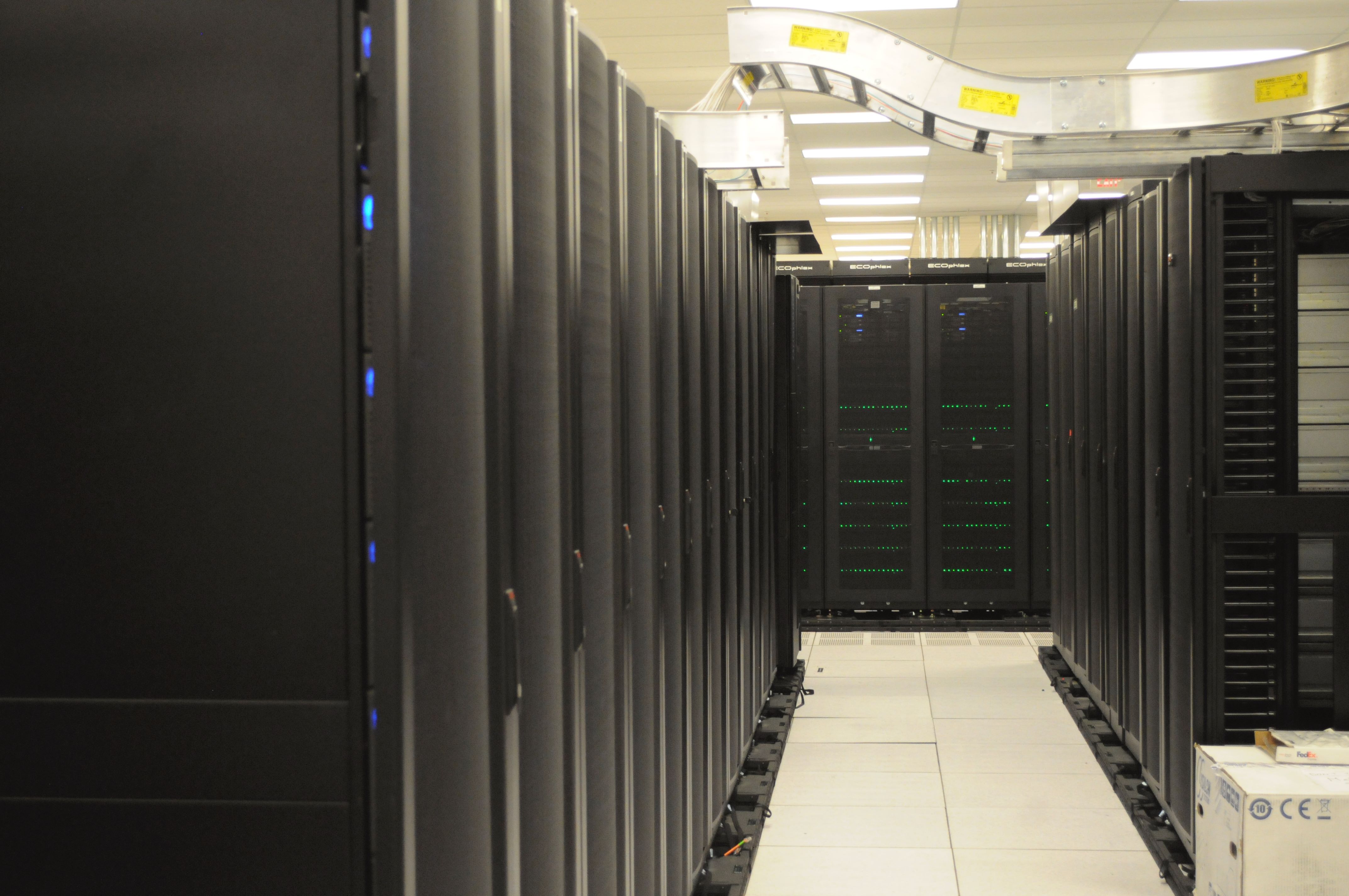
Illustrative archive photograph: server racks at NERSC, October 14, 2011; not a Shirudo installation. Photo: Derrick Coetzee / Wikimedia Commons, CC0 1.0 public-domain dedication. No image edits.
